

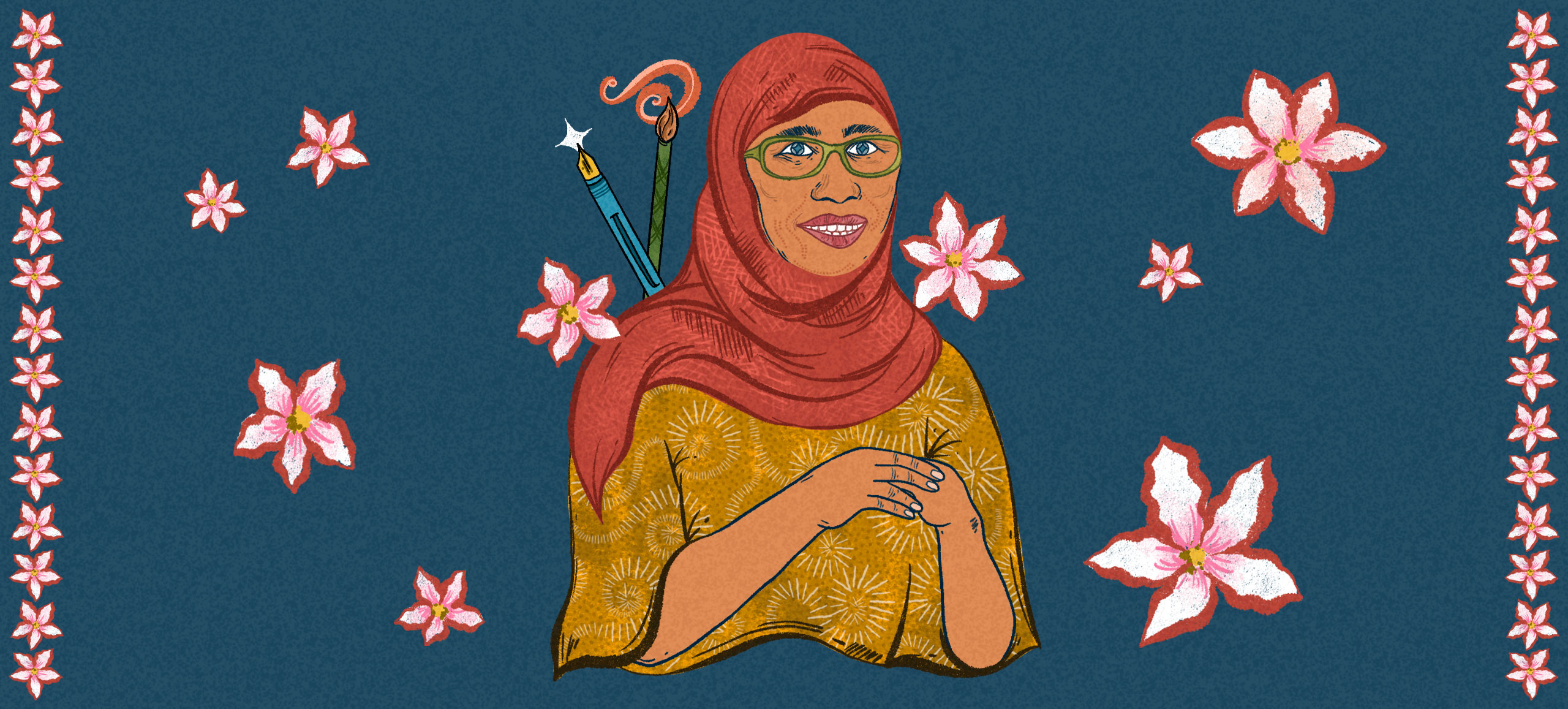
Nani Zulminarni, founder of PEKKA
Nani Zulminarni is a gender and development specialist, educator and prominent advocate of women-led grassroots change. She is the founder of Yaysan PEKKA (Pemberdayaan Perempuan Kepala Keluarga/ Foundation for Women-Headed Household Empowerment Program) in Indonesia. The organization was established in 2001 to support widows, divorced, and abandoned women who face deep discrimination and exclusion. Today, PEKKA leads a movement tackling inequality by empowering women-headed households and equipping them to claim their rights.
Through district-level associations led by marginalized women, the organization works within public systems to shift traditions, practices, and policies, enabling women to access resources, exercise leadership, and influence decision-making at every level. Partnering with us at Co-Impact, PEKKA has successfully engaged the Indonesian government, shaping policies on lifelong learning and opening space for women’s leadership in social and political life.
We asked Nani to share PEKKA’s journey, the strategy behind its impact, and the personal convictions that continue to fuel her changemaking work.
tl;dr (this interview in three sentences)
Nani Zulminarni, founder of PEKKA, leads a powerful movement in Indonesia empowering women-headed households to overcome inequality and discrimination. Through grassroots leadership and engagement with government, PEKKA enables women to access resources, shape policy, and transform their communities. Partnering with Co-Impact, Nani is driving long-term, structural change toward a more just and equitable society.
Why do you do this work?
Before founding PEKKA in 2000, I spent years as a field worker organizing women in rural areas around livelihood. That experience taught me what it truly means to be a woman in Indonesia. Families headed by women are the poorest of the poor, facing multi-dimensional challenges in both livelihood and social status. Many are survivors of domestic violence or conflict, carrying enormous stigma. Single, abandoned, divorced, or widowed women often hold the lowest status in society, confronting deep discrimination and exclusion.
These struggles are rooted in powerful norms, traditions, and practices, reinforced by a strong patriarchy that continues to treat women as second-class. Over my forty years working for women’s empowerment, I have seen many shifts in Indonesia’s social, political, and economic landscape. Yet I’ve also learned that legal reforms alone do not automatically change women’s status, improve their quality of life, or bring happiness.
It was this realization—and the determination to challenge these injustices—that led me to establish PEKKA, to begin organizing with women at the grassroots and building a movement for change.
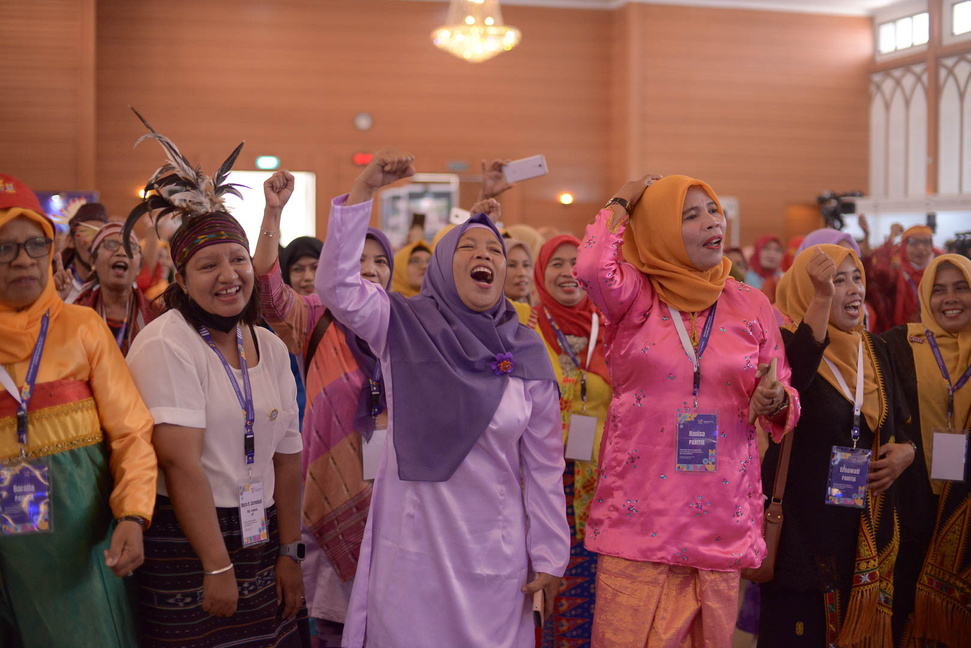
PEKKA's strategy starts at the grassroots levels and extends through the entire system. Photo by PEKKA.
“I am constantly inspired by grassroots women. Their knowledge, resilience, and strength are extraordinary. ”
Who inspires you most and why?
My greatest inspirations are my grandmother and my mother. They had no access to education or resources to sustain their livelihoods, and they endured a deeply patriarchal family system. Witnessing their struggle to simply be themselves showed me that no matter how strong the forces of exclusion are, when we realize our inner power, we can transform our lives.
I am also constantly inspired by grassroots women. Their knowledge, resilience, and strength are extraordinary. Many survive challenges that most people could not—widows who have lost both their husbands and livelihoods yet still manage to raise their children, becoming the sole breadwinners for their families. Their courage and perseverance are my greatest source of energy and inspiration.
How does PEKKA’s strategy pull the levers of change?
As women, we have to exercise power through different layers to have agency because our lives are often controlled and limited by norms within the family, the community, and public institutions. That’s why our strategy begins at the grassroots and extends through the entire system. Our core focus is to transform women’s lives, which means engaging everyone—from families to governments—in shifting traditions, practices, and values around gender equality.
With limited capacity and resources compared to the population in need and scale of the challenges we face, we work within government systems to maximize impact. By empowering grassroots women to build leadership skills and engage directly with local governments, we enable them to access and enjoy government resources and services, and demand that the government fulfill their needs and hear their voices. We also strengthen women’s collective power through elections—supporting them to take up leadership roles as village heads, neighborhood heads, and representatives in village parliaments.
Because Indonesia has a decentralized government, we also invest in strengthening local communities. Through Sarekat Pekka—district-level associations led by and for marginalized women—we equip and resource women leaders to exercise their leadership, to understand the system, and communicate effectively with the local government. Today, these associations are increasingly gaining legitimacy, with women leaders being invited into planning meetings and formal government engagement
What does the partnership with Co-Impact offer you?
In Indonesia, women’s empowerment is on the national agenda, but efforts have largely been project-based rather than strategic. This approach has failed to address inequality and injustice, with no clear curriculum or milestones to guide progress. Our partnership with Co-Impact is changing that. With their support and resources, we’ve developed a strategic framework and engaged in deep discussions with both local governments and the Ministry of Home Affairs—the key body responsible for women’s empowerment and education nationwide. The government’s response has been very positive, as they’ve recognized the limitations of their past approach and the potential for long-term systemic change.
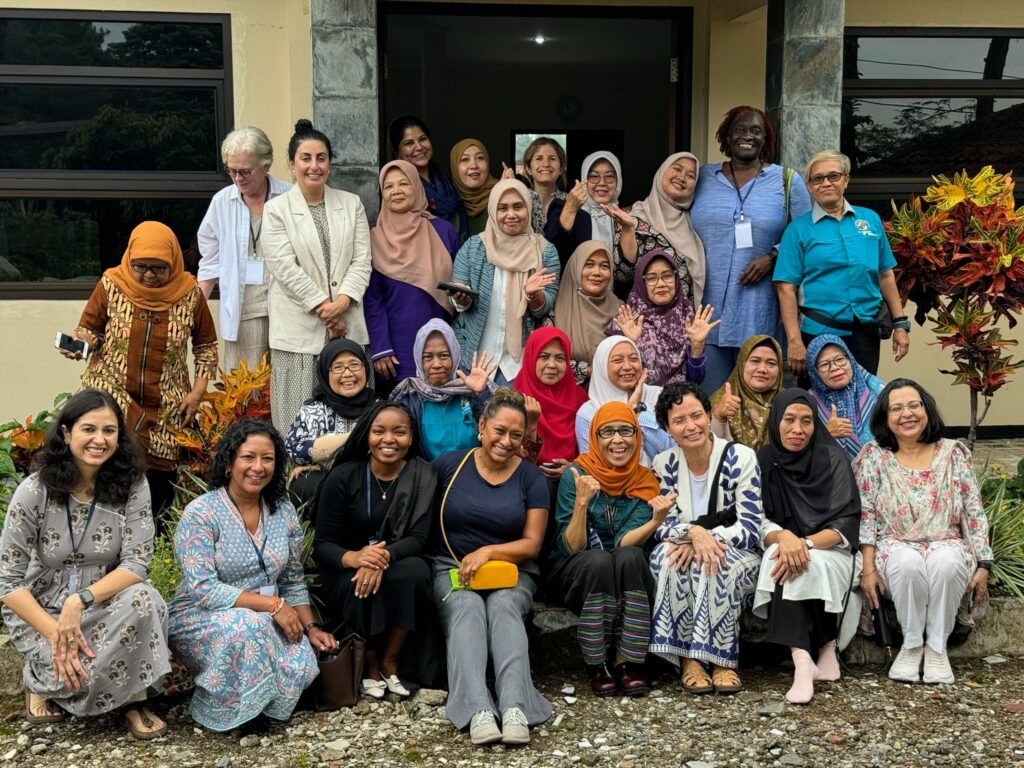
Co-Impact and PEKKA members during a meeting in Indonesia in November 2024. Photo by Co-Impact.
When will your work be done?
Our work will be done when we live in a just world—one where everyone can grow their agency and have equal access to the resources they need for their livelihoods and well-being. It’s a world where all people take part in strategic decision-making at the family, community, and state levels. Women, men, and people of all genders would share responsibility and leadership. In such a world, everyone could enjoy peace, freedom, clean air, safe water, and strong public services.
How do we get to this world?
To get there, we must work hand in hand with diverse funding partners. Women’s empowerment needs to be financed like any other public service—sustained, structured, and protected by law and regulations.
Philanthropy can support this by mobilizing the large non-governmental resources it has access to and by raising awareness within its own networks of wealthy individuals and corporations. Corporate funders have a responsibility to provide funding support systemically, not just project-by- project. Together, these efforts can drive the lasting change needed to achieve gender equality in Indonesia.
Can the impossible be made possible?
PEKKA women prove that the impossible can be made possible. They are among the poorest of the poor, many never having finished elementary school, yet they carry enormous responsibilities while facing discrimination, stigma, and systemic exclusion. I can share one woman’s story which represents the journey of many more of these women. She is a survivor of domestic violence and for a long time lacked the courage to leave her abusive marriage —until she connected with PEKKA. After her divorce, she completed elementary school, pursued further studies, and eventually graduated from university. She went on to become an educator, opening early childhood centers with other women in her community. Today she is a respected local leader.
Her story shows that nothing is impossible. Even women who endure multiple layers of discrimination and hardship can rise, grow, and emerge as changemakers.
“Our work will be done when we live in a just world—one where everyone can grow their agency and have equal access to the resources they need for their livelihoods and well-being.”
Find out more about how Nani and the women of PEKKA are tackling systemic gender inequality in Indonesia and demonstrating the power of collaborative working at the regional and national level here.
This article is part of our new series, Meet the changemakers, highlighting local leaders who are changing systems from within. These individuals inspire and exemplify our vision of collaborative, people-driven systems change. Illustrations by Sonaksha.
DECJUBA Foundation and Co-Impact announce new global partnership to advance gender equality
DECJUBA Foundation is pledging an AUD $450,000 commitment to Co-Impact’s Gender Fund across three years.
