

Written by Shagun Sabarwal and Nisha Dhawan
In 2025, philanthropy experienced a period of disruption. Long-standing assumptions about how change happens, how risk is managed, and what counts as value were tested. Funders began asking deeper strategic questions: Should we focus our efforts or expand our reach? Should we strengthen impact frameworks or simplify them? How do we balance accountability with trust in communities?
Amidst the turbulence, we issued a call that was both simple and demanding: shift power, trust local leaders, and commit to funding that enables them to address issues at scale. This was our blueprint for delivering lasting value.
This sparked conversation. Funders expressed both optimism and hesitation. Local partners voiced determination but also fatigue from navigating shifting priorities and short funding cycles.
If 2025 was about disruption, 2026 must be about conviction. The real question is not whether we believe in localisation, but how to operationalise it.
At both EMpower and Co-Impact, localisation is not a rhetorical commitment. It is a strategic choice. This choice requires long-term, flexible capital paired with deep partnership and accompaniment, and a willingness to redesign how decisions are made and how power flows.
Drawing on our combined experience across Asia and beyond, we offer five lessons, both practical and immediately actionable.
1. Shift your mindset about where knowledge lives
Many funders begin with a predefined strategy and then search for partners who can execute it. Strategy matters — but it cannot be rigid. Communities closest to a problem understand it best. Effective strategy starts with them and adapts as local insight evolves.
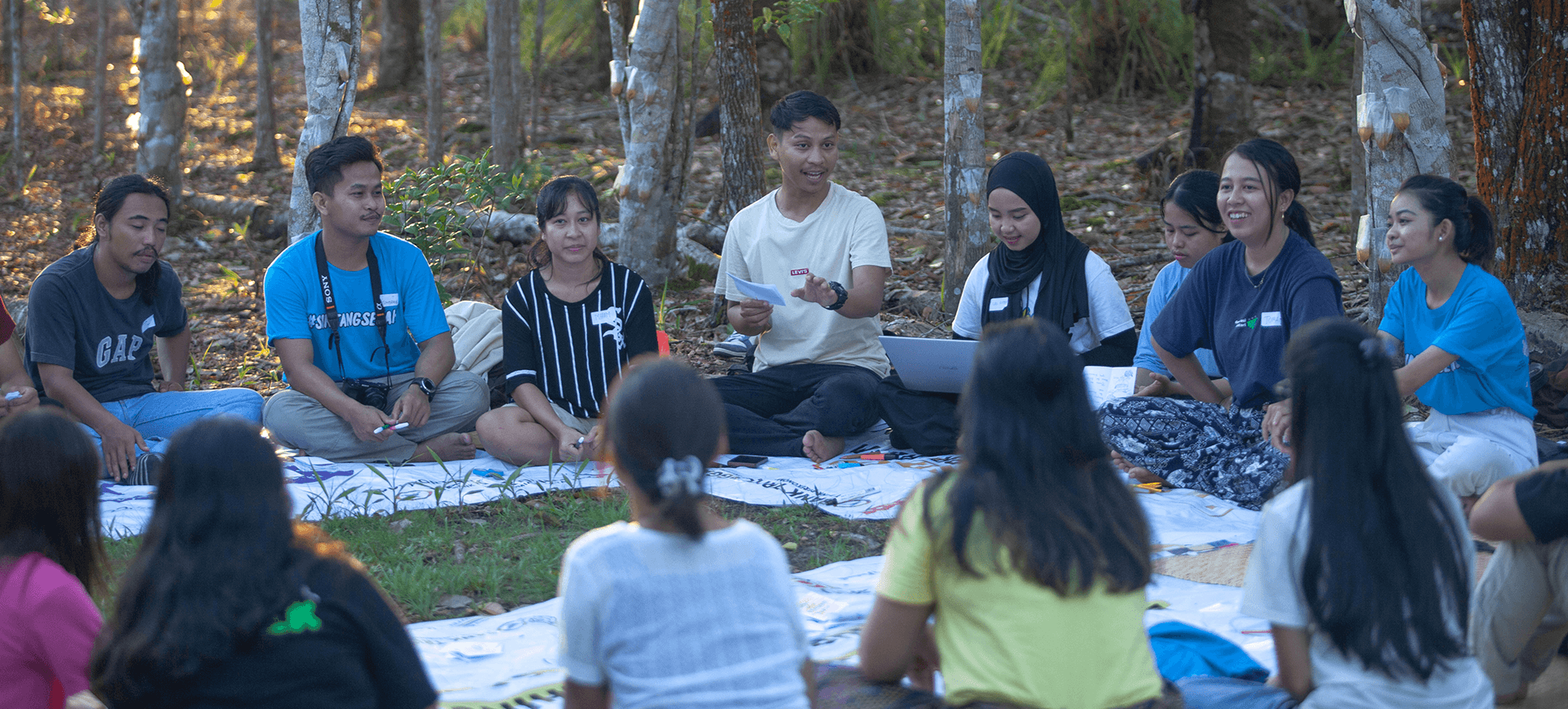
At EMpower, we embed this principle into how we work. Across five countries, we engage young people through fellowships and advisory structures that bring them into strategy and funding conversations. In India, for example, young women leaders help shape funding priorities, participate in grantee visits, contribute to strategic discussions alongside the board, and represent EMpower at national and international forums. They are involved before funding decisions are made.
This leads to stronger strategy. Discussions around adolescent programming, for example, reflect lived realities – like mobility or safety concerns – that outsiders might overlook.
The same logic underpins our work at Co-Impact, where local partners help drive our central ambition: scale. Scale is not simply replicating projects; it means institutionalising change within policies, budgets, accountability mechanisms, and leadership so it lasts beyond any single grant cycle.
At Co-impact we support partners from the outset to design programs with these systems in mind. In Indonesia, the organisation Gemawan works through women’s coalitions to influence land rights, agricultural access, and participation in local governance — engaging district authorities, shaping budget allocations, and strengthening women’s representation in decision-making bodies.
Localisation empowers those closest to the challenges. Strategy works best when insight flows both ways.
How to implement this shift:
- Involve affected communities before finalising strategy, not after
- Build governance mechanisms that give local leaders structured decision-making roles.
- Allocate time and budget for institutional adaptation.
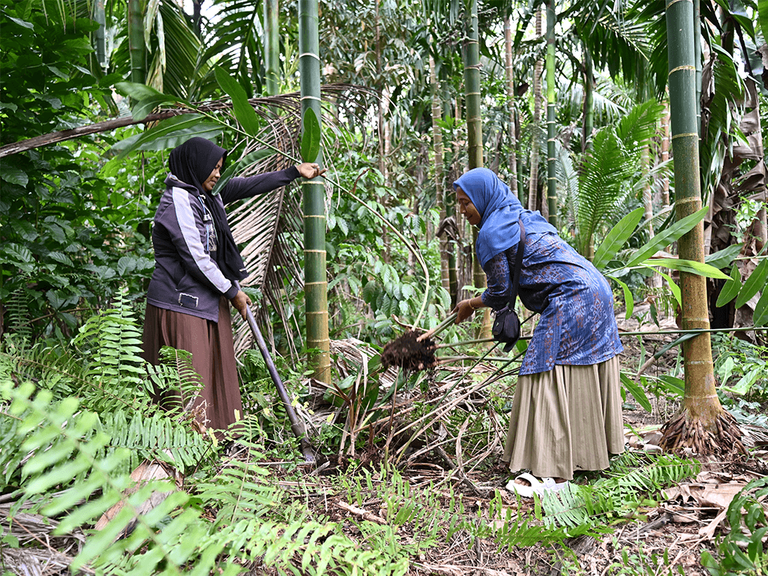
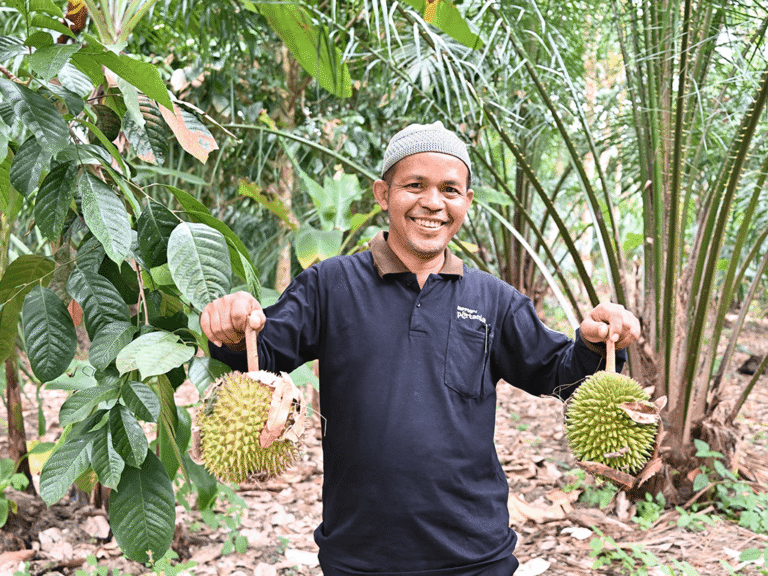
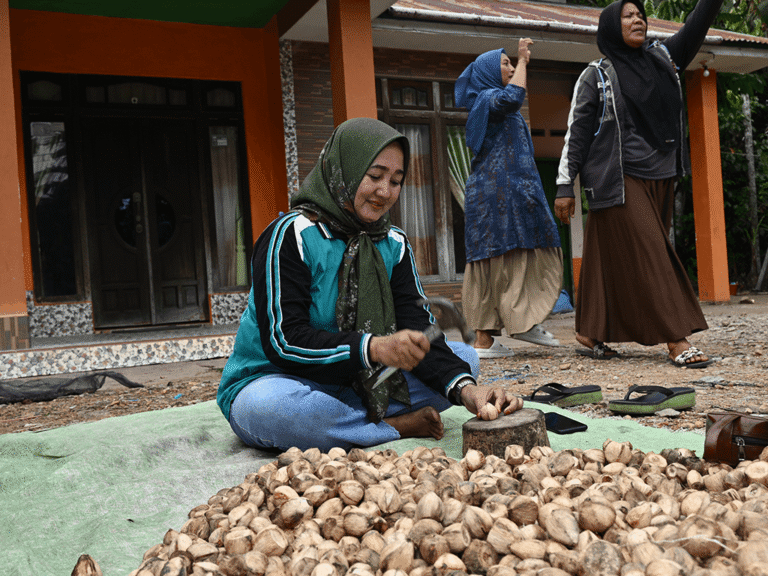
Gemawan Association’s PEMANTIK Initiative aims to promote women’s participation, voices, and leadership in natural resource governance at all levels in Indonesia. Photos by Co-Impact
2. Redesign measurement so trust and accountability reinforce each other
At a time of immense funding pressure, proof of impact is essential. Trust and accountability are often framed as opposites. In practice, they must coexist — which requires measurement frameworks that people actually understand and use.
At EMpower, we realised our impact framework was collecting data partners rarely used and did not reflect meaningful change in young people’s lives. We stripped it back to focus on agency, opportunity, and organisational strength. There were concerns that measuring less might weaken rigour. Instead, the opposite happened: data quality improved and there was deeper engagement from our partners.
Centring partners in measurement is critical. When local organisations shape what’s measured and how, accountability strengthens.
At Co-Impact, we encourage partners to track progress at three levels: people’s lives, public systems, and organisational capacity. This prevents measurement from shrinking ambition to what any single organisation can deliver.
Systems change is rarely linear and never the result of one actor, which is why we focus on contribution rather than attribution. Partners examine whether public systems are functioning differently — from budgets and policies to decision-making processes and leadership pipelines — and whether these shifts translate into improvements in people’s lives at scale.
Localisation is not just about who receives funding, but who defines progress, interprets evidence, and decides when to pivot.
How to implement this shift:
- Collect only what you will use.
- Allow partners to set context-specific indicators within shared outcomes goals
- Invest in partners’ LME capacity as a long-term asset, not just a reporting requirement.
3. Gender equality is strategically essential
Added to funding pressures we are seeing rising gender backlash around the world and commitment to gender equality initiatives waver. Yet it is precisely at this moment that gender-focused funding is more important than ever.
Gender equality must be understood as a driver of wider change. Women and girls do not live single-issue lives; their experiences intersect with health, education, labour markets and governance. Ignoring gender dynamics weakens outcomes across sectors. Above all gender responsive design and implementation is the right thing to do not just from an impact and strategic gains perspective.
This is why we remain committed to gender-responsive design. Take Lend A Hand India (LAHI), for example. EMpower was among LAHI’s first institutional funders, supporting the organisation’s growth and development through its commitment to funding partners for up to 10 years. The organisation has since expanded significantly and has, over time, been supported by Co-impact and other funders for their systems change journey. What began as a programme focused on job skills training has evolved into an organisation shaping how state education systems integrate vocational learning and STEM pathways for girls across India. This transition was enabled by flexible, sustained funding over time, allowing LAHI to move beyond programme delivery and influence how education systems operate.
And LAHI’s story isn’t an isolated incident. Co-Impact’s partner CAMFED have demonstrated that embedding young female graduates as mentors within public school systems has an impact well beyond individual girls’ outcomes. Institutionalising these mentor roles, aligning incentives, and strengthening teacher support structures, helps shift how schools’ function. Retention improves, leadership pathways open, and school-level accountability strengthens. The aim is not to create a parallel programme, but to embed these approaches within the system itself so they can reach entire districts and, over time, inform national policy.
Embedding gender-responsive approaches and shifting perceptions about “appropriate” work is not peripheral; it determines whether technical training translates into real employment opportunities. Gender-responsive design improves performance because it addresses root constraints.
How to implement this shift:
- Conduct gender and power analysis as part of systems design.
- Fund norm-change components alongside technical interventions.
- Track outcomes that reflect agency and access not just service uptake.
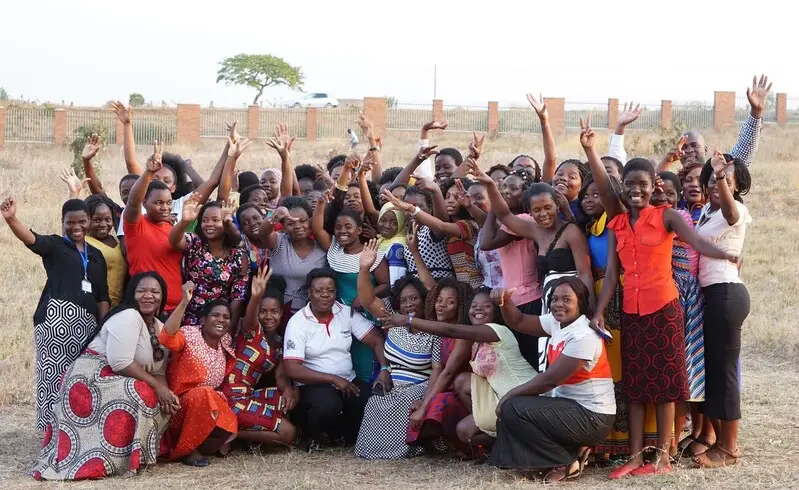
CAMFED members gather for a leadership meeting in Lilongwe, Malawi, September 2019. Photo by Anke Adams/CAMFED
4. Invest in ecosystems, not projects
Backing local leadership means strengthening the ecosystem around individuals, not just funding standalone interventions.
The key is patience. We cannot simply provide funding and walk away. Supporting lasting change requires working alongside partners over time and offering funding that is both long-term and focused on strengthening organisational capabilities.
We sometimes describe this as a “funding-plus” model: going beyond multi-year flexible grants to also invest in organisational capacity and support coalition-building with government actors. The aim is not to create parallel delivery models, but to strengthen inclusive public systems so that reform reaches millions and endures beyond the life of a grant.
At both Co-Impact and EMpower, we recognise that effective funding must go beyond individual projects. It often involves coalition-building, policy alignment, and institutional strengthening before results emerge. But it is precisely this ability to work within systems that allows impact to last beyond a single funding cycle.
How to implement this shift:
- Provide multi-year and flexible funding.
- Provide strategic support
- Support coalition building and government alignment.
- Evaluate progress at systems level, not just project outputs.
5. Create a community of learning, and act boldly
There are no one-size-fits-all solutions. Creating spaces to learn from one another is how effective initiatives are designed. These insights come from many places: young people exchanging ideas, grantees sharing implementation lessons, and funders sitting down with partners and peers. Together, these form what we call learning communities.
Through design workshops, site visits, and peer exchanges, these spaces often surface insights that formal evaluation misses. EMpower has seen this through partnerships with organisations such as Waves for Change in South Africa, where validation of its surf therapy model helped build credibility with public systems who adopted and scaled the model. When funders engage local leaders and peers, perceptions of risk and barriers to action fall away.
In today’s geopolitical moment, caution is understandable, but delay carries consequences. Communities navigating shrinking civic space, economic volatility and gender backlash cannot pause.
Acting boldly means accelerating long-term, flexible funding while supporting inclusive systems and maintaining a focus on outcomes. It also means rejecting false trade-offs between trust and accountability, scale and equity, and local leadership and impact.
These are not trade-offs; they are design choices.
How to implement this shift:
- Join or convene funder collaboratives focused on shared learning.
- Commit to longer funding horizons.
- Publicly articulate risk appetite aligned with mission.
What funders may need to unlearn
There is one belief that may be holding philanthropy back, which is that proximity compromises objectivity.
In reality, proximity sharpens strategy. Local leaders understand informal institutions, political dynamics, and gender norms that determine whether reform takes root.
The danger in this moment is not experimentation, but retreat.
If there is one thing we hope funders remember, it is this: durable change is built by equipping and trusting those closest to the challenge while holding ourselves accountable to redesign the systems through which we fund.
Localisation is not a slogan; it is a structural shift. The future of social change will be determined not by how eloquently we speak about trust, but by whether we fund and institutionalise reform with conviction.
2026 can be the year philanthropy moves from diagnosis to design, from acknowledging power imbalances to restructuring how decisions are made, how learning happens and how capital flows.
The future of social change will not be determined by how eloquently we speak about trust but by whether we practice it.