

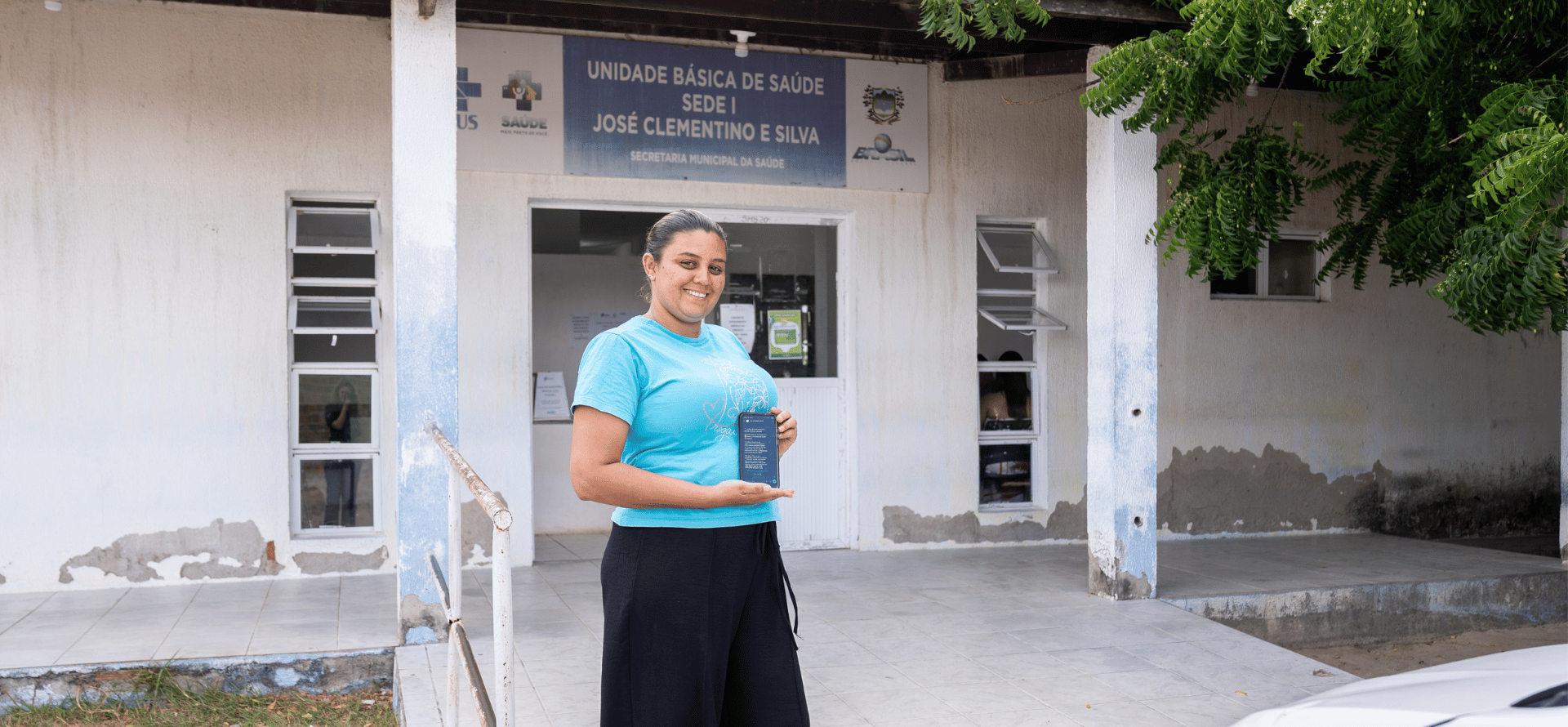
For Lídia, a mother of three living in the municipality of Itapiúna, Ceará, in Northeast Brazil, a WhatsApp message arrived at a crucial moment.
She had not had a cervical cancer screening in around 10 years. When a reminder from ImpulsoGov’s automated messaging initiative alerted her that she was overdue for preventive care, she decided to make an appointment.
The screening detected precancerous lesions on her cervix. Lídia was referred to specialised care and underwent treatment that may not have happened without that initial reminder.
“This saves lives,” Lídia said, reflecting on the impact of the initiative.
Cervical cancer is highly preventable and can often be cured when detected and treated early. Yet it remains a significant public-health challenge in Brazil. In 2024, 7,493 women died from cervical cancer, according to Brazil’s Ministry of Health and National Cancer Institute (INCA). This type of cancer is also estimated to be the second most common cancer among women in Brazil’s North and Northeast regions,excluding non-melanoma skin cancer. These regions have large afro-brazilian, indigenous, and other traditional populations.
In Brazil, the Ministry of Health recommends cervical cancer screening for women aged 25 to 64. ImpulsoGov uses public-health data and technology to help health teams identify people who are overdue for essential care. Its platform transforms existing health-system data into actionable nominal lists, helping teams see who may need a preventive exam, appointment or follow-up. The organisation then uses automated WhatsApp messages to connect people directly with local health services. In a country where almost 70% of the population uses WhatsApp, the impact can be tremendous (Carta Capital, 2026).
This combination of data and direct communication can help make healthcare more proactive. Rather than waiting for someone to return to a health facility, teams can use information already available within the public system to identify who may have been missed and offer a timely reminder.
Founded in 2019, ImpulsoGov partners with local municipalities to enable targeted, preventative public healthcare based on existing electronic health records.
ImpulsoGov’s cervical cancer prevention work is a distinct line of care, operating in parallel to its work supporting pregnant people.
As part of its partnership with Co-Impact, which began in 2025, ImpulsoGov conducted research on maternal mortality in Brazil. The team found that 90% of maternal deaths could have been prevented with timely care.
This was the first area in which ImpulsoGov tested direct messaging to citizens. To date, the initiative has sent more than 600,000 WhatsApp messages to people overdue for preventive care for cervical cancer. After partnering with more than 430 cities across Brazil, ImpulsoGov is now partnering with the Ministry of Health to scale the approach through Brazil’s federal health system.
The lessons from the cervical cancer initiative are now helping shape this broader work, including an early messaging pilot with pregnant people in Cariri, Ceará. With support from Co-Impact, ImpulsoGov is showing how technology can help public health systems become more proactive and responsive. A simple message can help someone reconnect with essential care and, as Lídia said herself, save lives.