

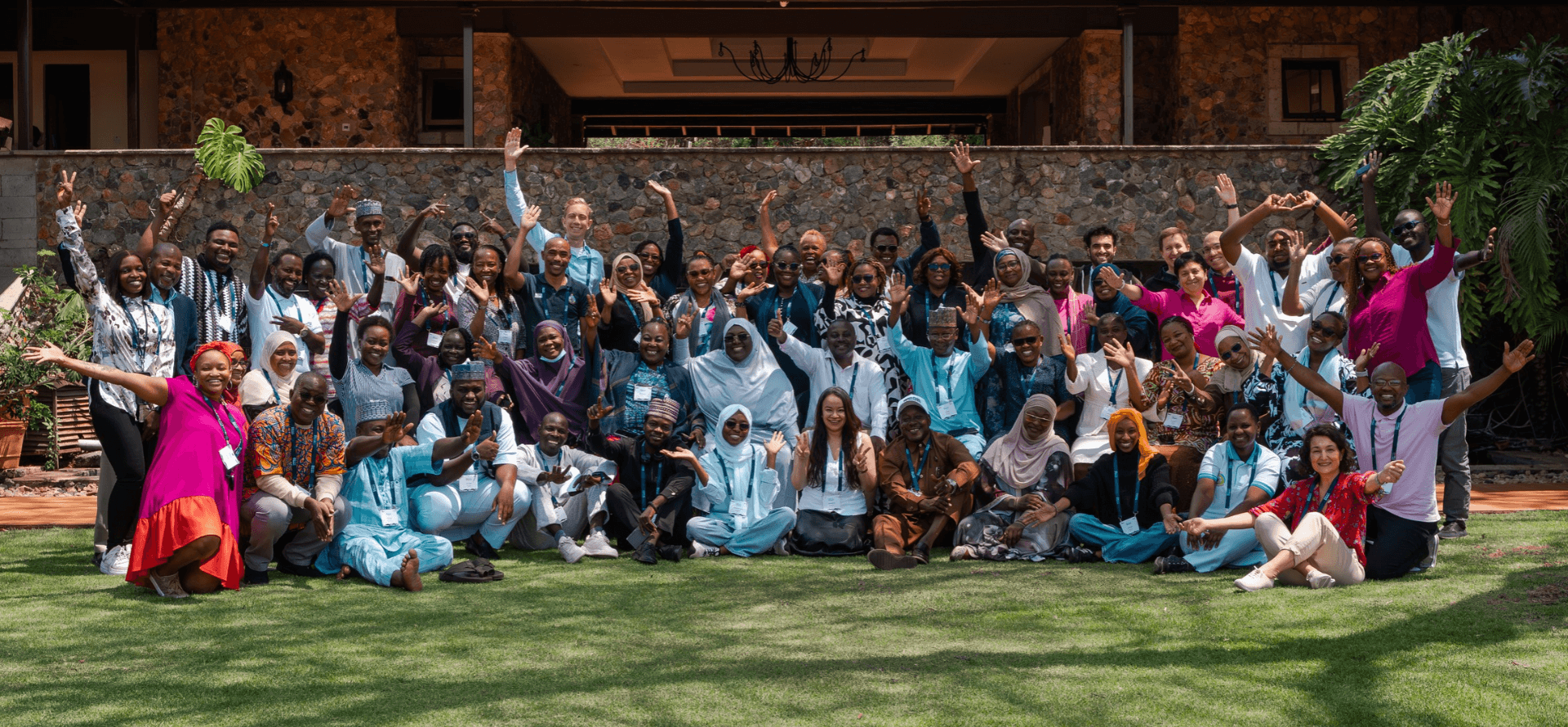
We’re delighted to welcome seven, locally rooted and predominantly women-led organisations to our community.
In 2026, the LEGO Foundation and Co-Impact launched a five-year, US$30 million partnership to strengthen public education systems in Kenya and Nigeria and improve learning and wellbeing outcomes for children affected by conflict and crisis.
The partnership is now marking an important milestone with the selection of seven locally rooted, predominantly women-led Program Partners across Kenya and Nigeria. Together, these organizations bring deep community knowledge, trusted government relationships, evidence of impact, and complementary expertise across early childhood development, foundational learning, refugee and host-community inclusion, wellbeing, safeguarding, and crisis-responsive education governance. Their leadership and deep contextual knowledge are central to designing approaches that can be owned, adapted and sustained within the systems they seek to strengthen.
While each partner improves the wider education system through a different pathway, they share a common ambition: to strengthen the systems children and communities rely on so that children affected by conflict and crisis can learn, recover, and thrive. Their work will be a powerful demonstration of how to ensure systems can better respond to the needs of children living in conflict and crisis. This is more important than ever given the significant and growing number of children around the world who have been displaced through conflict, climate change and other critical factors.
Each organization will now receive support from Co-Impact to develop their systems change strategies, including how they will forge winning coalitions and adapt their learning, measurement and evaluation capacity to better track progress and share insights with the wider community.
This is a significant moment of momentum for the partnership and marks an opportunity for other funders to join in supporting locally led approaches that can improve learning, wellbeing, and inclusion for children affected by conflict and crisis in Kenya and Nigeria.
For more about the partners, watch this video or read about them below:
About the Program Partners
Girl Child Network, Kenya
Girl Child Network is one of Kenya’s leading organizations working to improve educational opportunities for refugee and host-community children. It combines expertise in foundational learning, psychosocial support, girls’ education, and school re-entry, with a strong track record of partnering with government to translate evidence into policy and practice.
Basic Needs Basic Rights, Kenya
For more than two decades, Basic Needs Basic Rights has worked to integrate psychosocial wellbeing and resilience into public education systems. Through a strong evidence base and close partnerships with the government, the organization is helping schools become safer, more supportive environments where children can learn and thrive.
Madrasa Early Childhood Programme, Kenya
The Madrasa Early Childhood Programme is one of East Africa’s most established early childhood development organizations. For more than four decades, it has strengthened community-rooted and government-owned early learning systems, helping shape teacher development and improve the quality of early childhood education across Kenya.
TaRL Africa, Nigeria
TaRL Africa is a globally recognized leader in foundational learning. Working with governments, it improves literacy and numeracy through Teaching at the Right Level, demonstrating how evidence-based approaches can be embedded within public education systems and delivered at scale.
Common Heritage Foundation, Nigeria
With nearly three decades of experience, Common Heritage Foundation works alongside state and local governments to strengthen education governance, community accountability, and public systems. Its work helps ensure education systems are more responsive to the needs of children affected by conflict and exclusion.
Centre for Girls’ Education, Nigeria
For more than 18 years, the Centre for Girls’ Education has worked with governments and communities to improve educational opportunities for adolescent girls. It combines expertise in girls’ education, safe schools, mentoring, and trauma-informed approaches to help more girls stay in school and succeed.
Restoration of Hope Initiative, Nigeria
Restoration of Hope Initiative brings extensive experience strengthening education systems in conflict-affected communities through government partnerships. Working across education, child protection, and psychosocial support, it helps build more resilient systems that enable vulnerable children to continue learning during and after crises.